About Richard Mathis
Contemporary Pictorialist & Fine Art Image-Maker
Veni. Vidi. Creavi.
I came. I saw. I created.

I have spent much of my life trying to understand how people make meaning—how we carry memory, how identity changes over time, and how the places we inhabit become part of who we are.
For more than four decades, I explored those questions professionally as a psychologist. Today I explore many of the same questions through photography and image-making.
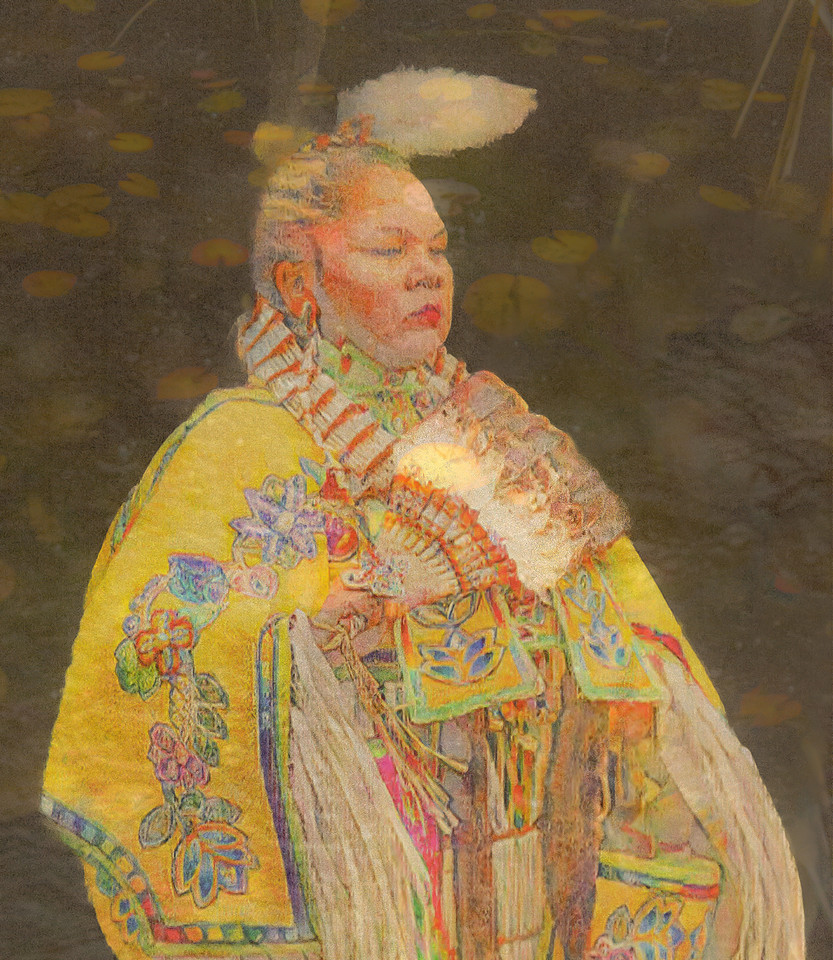
My work begins with an encounter: a person, a landscape, a moment of light, a river disappearing into mist. I photograph what is before me, but increasingly the photograph is only the beginning. Through layering, blending, digital painting, and painterly interpretation, I create images that move between photography and painting, observation and memory.
I call this process fusion art.
It is also my contemporary extension of the Pictorialist tradition. The early Pictorialists understood that a photograph could be more than a literal record of what stood before the camera. They manipulated tone, texture, atmosphere, and the physical print to communicate something felt as well as seen. I work with digital tools rather than darkroom chemistry, but the impulse is much the same: the camera records the encounter; the finished image interprets it.
The Land Remembers
Again and again, I find myself returning to the idea that places remember.
Rivers carry what has passed through them. Forests reveal evidence of change. Buildings hold the presence of people who occupied them. Landscapes accumulate histories—personal, cultural, ecological and sometimes painful—that remain long after the original moment has disappeared.
That idea lies at the heart of my work.
It is particularly important in Where the Land Remembers, a body of photographic montages growing from many years of photographing Native people, gatherings, dancers, elders, families, and the landscapes of the American South.
My relationship to this work did not begin as an artistic concept. It grew from relationships and experiences accumulated over decades.
My life and work brought me into sustained contact with Native communities in North Carolina, particularly through my years of involvement with the Lumbee community and United Tribes of North Carolina. Over time, photographing these communities became inseparable from listening to the people I photographed and learning from the relationships that developed around the camera.
Among the people who profoundly influenced the way I think about land and human relationship to it was Tadodaho Leon Shenandoah, with whom I had conversations about land, people, responsibility, and the connections between them. Those conversations stayed with me. Their significance became clearer as my own work increasingly turned toward memory and place.
Another important encounter came through photographing American Indian Movement co-founder Dennis Banks. My portrait of Banks is now held in the permanent collection of the Smithsonian National Museum of the American Indian.
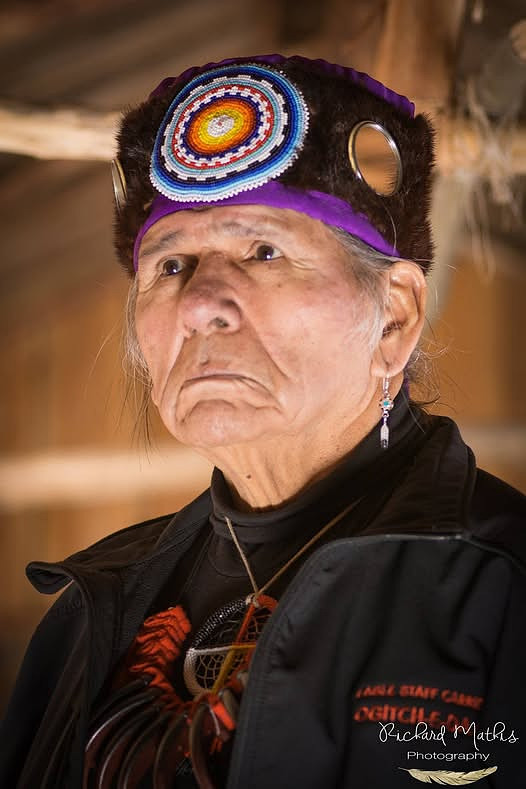
These experiences taught me something important about photographing people whose histories are not my own: the photographer's responsibility begins with witnessing and listening.
That principle guides Where the Land Remembers.
The people appearing in these works are contemporary people, not figures from an imagined past. I layer them with rivers, forests, flowers, stone, water, sky and, occasionally, the cosmos—not to dissolve their individuality, but to explore relationships among person, culture, memory and place.
The figures are not ghosts.
They are presences.
Between the Outer and Inner Landscape
Other bodies of work approach these questions differently.
In my landscape photography, water has become a recurring presence. Cypress swamps, rivers, lakes, wetlands, coastlines and reflected light become places where stillness and change coexist. These works increasingly form the visual language of What the Water Remembers.
My environmental portraits explore another relationship: what happens when the setting is allowed to become an active participant in the portrait. Rather than separating people from their surroundings, I am interested in the dialogue between the two—the clues a place gives us about a life.
Still other images move inward, exploring identity as layered, contradictory, changing and sometimes elusive.
Despite their differences, I see these bodies of work as parts of the same inquiry.
What do we carry? What does a place carry? And what remains after the moment itself has passed?
A Life of Looking
My path to art has not been linear.
I was raised in the rural American South in a family shaped by religion, storytelling and generations of lived history. I later trained and worked as a psychologist, spending decades listening closely to people's lives and trying to understand how experience becomes identity.
Photography eventually became another way of listening.
The camera taught me to pay attention differently—to light moving across water, the expression that exists for a fraction of a second, the relationship between a person and the ground beneath their feet.
Over time, simply recording those things became insufficient.
I wanted the finished image to contain something of what memory does to experience: how it layers one moment over another, softens some things, intensifies others and creates connections that may not have been visible when the shutter was released.
That is where my work lives today.
My photographs have been exhibited in museums, galleries and juried exhibitions, including a solo exhibition at the North Carolina Museum of Natural Sciences, and are held in public and private collections. My portrait of Dennis Banks is held by the Smithsonian National Museum of the American Indian.
But exhibitions and collections are not ultimately why I make the work.
I make it because I continue to be astonished by the fact that a place can outlive us and still bear evidence that we were there.
I make it because photography allows me to witness something that will never occur in precisely the same way again.
And I make it because sometimes, after the photograph has been taken and transformed, an image begins to reveal something I did not know I had seen.
The land is never merely scenery.
It remembers.